
Manufacturing & Quality
Vacuum Furnace Hot-Zone Maintenance: Inspection & Replacement Planning
What should you inspect before replacing a vacuum furnace hot zone? Review heaters, shields, supports and operating records, then define the drawings and requirements for a custom replacement.
At a glance
Document the hot zone’s condition, compare it with the furnace requirements and investigate changes in performance before choosing individual replacement parts or a complete assembly. Maintenance intervals and return-to-service checks must follow the equipment manufacturer’s instructions.
What should hot-zone maintenance cover?
Vacuum furnace hot-zone maintenance starts with the condition of the heating elements, insulation or shields, supports and their interfaces. It also needs the furnace’s operating history. A damaged shield and a longer pump-down time are useful observations, but they do not identify the same fault or justify the same repair.
For a custom replacement, the most useful starting point is a documented comparison between the existing assembly, the equipment drawing and the process requirements. This guide focuses on inspection records and replacement planning for industrial hot zones, particularly metallic assemblies. It is not a service procedure for an energized or hot furnace.
Before inspection: qualified personnel should follow the furnace manufacturer’s instructions for shutdown, cooling, isolation and safe access. Electrical testing, vacuum-system work and return-to-service acceptance belong with authorized maintenance personnel and the equipment supplier.
Record the observation before deciding the remedy
Photograph the assembly before removing components. Identify the location, part orientation and drawing reference, and compare it with earlier maintenance records. Ipsen’s preventive-maintenance guidance includes checking heating elements, shields and retaining features for damage or distortion. Its instructions are equipment-specific; inspection frequency should follow the applicable manual and service history.
| Area | What to document | Question for the review |
|---|---|---|
| Heat shields or insulation | Missing, displaced or distorted layers; attachment condition; locations of deposits | Is the original layer arrangement known, and are clearances affected? |
| Heating elements and connections | Visible breaks, deformation and connection positions, without disturbing unsafe equipment | Can the replacement match the specified material, section and connection geometry? |
| Hearth, racks and fixtures | Support positions, distortion, contact areas and the required load envelope | Are the mating dimensions and loading requirements available? |
| Operating history | Process changes, maintenance events and recorded changes in furnace performance | Does the problem also require checks outside the hot zone? |
Discoloration, contamination, slower pump-down or changed cycle behavior need investigation in context. Leaks, pumping performance, load cleanliness and other furnace systems may contribute. Replacing a hot zone alone is not a diagnosis. Ipsen’s furnace-upgrade planning guidance similarly considers the hot zone alongside the rest of the equipment.
Individual part, shield pack or complete assembly?
The appropriate scope depends on the documented damage and the condition of the surrounding assembly. A request for an individual heating band differs from a shield-pack replacement or a full rebuild. The purchasing specification should name that scope rather than use “hot-zone repair” for every option.
- Individual component: identify the affected part, material, dimensions and interfaces. Confirm that the surrounding assembly is suitable to retain.
- Shield assembly: define the layer arrangement, attachment details, apertures and relationship to the heater and work zone.
- Complete hot zone or rebuild: define the overall envelope, support arrangement, electrical and mechanical interfaces, and the acceptance responsibilities.
For an individual metallic part, review molybdenum heat shields, molybdenum heating elements and molybdenum fasteners. Identify the part’s position and mating dimensions within the existing assembly.
Explore our heat-shield assemblies, heating bands and racks and fixtures. For a broader scope, use the replacement and rebuild enquiry page.
Information to send for a custom replacement
A photo helps establish the component family; it rarely defines a complete replacement. Send the available records first and mark unknown details clearly. The following checklist draws on the equipment information requested in Ipsen’s hot-zone specification checklist, adapted here for a component enquiry.
- Equipment identification: manufacturer, model, serial number and relevant drawing revision.
- Geometry: usable work zone, assembly envelope, interfaces, mounting points and photographs with location references.
- Materials and arrangement: existing heater grade and section, shield or insulation construction, supports and connection details.
- Process conditions: actual operating temperature, vacuum or atmosphere requirements, cycle and load information. Distinguish operating conditions from the equipment’s rated maximum.
- Supply scope: individual parts, assembled replacement or rebuild components; quantity, inspection documents and required delivery date.
BOMO Metals reviews drawing-based requirements for custom vacuum furnace hot-zone components. Material selection, manufacturing scope and inspection requirements are agreed for the project. Installation, commissioning and furnace performance acceptance must also be assigned explicitly; a component quotation does not establish those services.
Common planning questions
How often should a vacuum furnace hot zone be inspected?
Use the furnace manufacturer’s maintenance schedule, process requirements and recorded condition. There is no universal interval or service life that applies to every hot-zone material, load and operating cycle.
Does a distorted shield mean the entire hot zone needs replacing?
Not necessarily. Record its location and its effect on clearances, then have the surrounding assembly assessed. The review may define an individual shield, a shield pack or a broader replacement scope.
Can BOMO Metals quote from photographs?
Photographs can start the enquiry. A manufacturing quotation may also require drawings, mating dimensions, material identification and operating conditions. Tell us which information is available so the remaining requirements can be clarified.
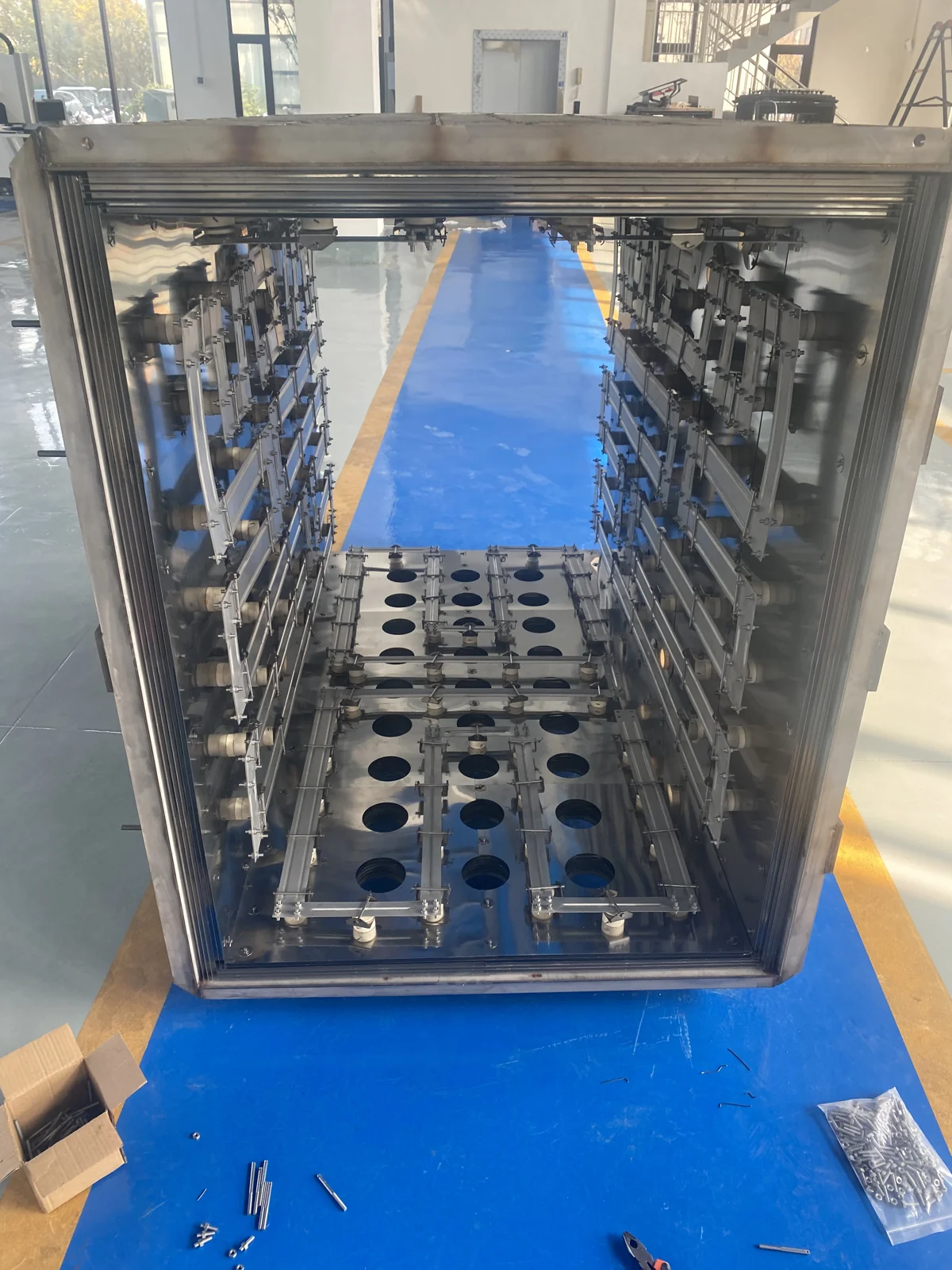
Image and drawing context: the cover is a component example from our company materials; it is not a documented maintenance case or a material test result. The cross-section is an explanatory schematic without production dimensions. Use the equipment drawing and agreed inspection records to define an actual replacement.
About this guide: BOMO Metals combines the cited technical references with a drawing-based procurement checklist. Source examples describe their own materials and equipment. Manufacturing scope and acceptance requirements are confirmed for each enquiry.
Planning a hot-zone replacement?
Send the available drawings, photographs and operating requirements for a project-specific manufacturing review.