
Materials & Applications
Tungsten Machining: Material, Design & Drawing Guide
Pure tungsten and tungsten heavy alloys need different machining reviews. Learn which material details, edges, holes, threads and inspection requirements to define before requesting a custom component quotation.
At a glance
Start with the exact material grade, then review the component’s geometry, functional surfaces and inspection requirements. Pure tungsten, tungsten heavy alloys, tungsten-copper composites and cemented carbide are different materials; a machining result for one does not establish a capability for the others.
Which tungsten material does the drawing require?
Tungsten machining is not one uniform process. A drawing for pure tungsten, a tungsten heavy alloy or a tungsten-copper composite can require a different manufacturing review. Before discussing machining allowances or tolerances, identify the grade and the finished component’s function.
These names are sometimes shortened to “tungsten” in enquiries, but they describe different materials. An example demonstrated on a tungsten heavy alloy should not automatically become a promise for pure tungsten. Cemented tungsten carbide also belongs to a different material system.
| Material family | Identification to provide | Why the distinction matters |
|---|---|---|
| Pure tungsten | Grade, required purity and supplied material condition | Microstructure and condition influence cutting behavior and edge integrity. |
| Tungsten heavy alloy | Specified grade and binder system, such as W–Ni–Fe or W–Ni–Cu | A metallic binder changes the material response. Tungsten percentage alone is not a complete machining specification. |
| Tungsten-copper composite | W/Cu composition and applicable material requirements | Its two constituent phases require an appropriate manufacturing and surface review. |
| Cemented tungsten carbide | Carbide grade, binder and finished-part requirements | WC-based hardmetal is not pure metallic tungsten; the processing route must be identified separately. |
For context, published micro-milling research on pure tungsten examines the influence of microstructure on machinability. A Mitsui Seiki machining case, by comparison, concerns a 97% tungsten heavy alloy. These sources address different materials and machining conditions; neither establishes a universal BOMO Metals capability or tolerance.
Five features to review before machining
A useful drawing distinguishes functional requirements from dimensions that can remain flexible. Mark the surfaces that locate, seal, contact another component or carry a load. This lets the manufacturing review focus on the features that affect performance.
- Edges and hole exits: identify edge breaks, burr restrictions and surfaces where chips or local damage would affect assembly. Do not leave a critical edge condition implicit.
- Internal corners and tool access: review recess depth, corner radii and the space needed to reach the feature. A small design adjustment may change the available process route.
- Thin walls and narrow sections: show the finished geometry and explain which features are functional. Workholding and the sequence of material removal need review alongside the shape.
- Threads and connections: specify the thread standard, size, depth and mating function. Discuss whether the connection design is appropriate for the selected grade and material condition.
- Datums, tolerances and finish: identify the measurement references and the surfaces that control fit. State flatness, position or roughness requirements where the application needs them, rather than applying the tightest value to every surface.
Choose the route for the grade and geometry
Turning, milling, grinding and electrical discharge machining may be considered during a project review, depending on the material, feature and required surface condition. The presence of a machine in a workshop does not establish that every grade and geometry can meet the same specification.
Midwest Tungsten Service’s fabrication guidance for its tungsten alloys discusses composition-dependent machining and the use of wire or sinker EDM. That document concerns its alloy families, not a universal pure-tungsten process. It also notes possible EDM-related surface effects, so an electrically machined surface should not automatically be described as unaffected.
For a functional surface, specify whether its condition after machining is sufficient or whether additional processing and verification need review. Ask how the proposed route will preserve the critical feature and how it will be inspected. Cutting settings and machining allowances should be selected for the actual material and setup, not copied from a general article.
For pure tungsten starting material, compare tungsten sheet and plate blanks with tungsten rods. State which dimensions describe the supplied blank and which belong to the finished part; identify later machining separately.
Our manufacturing page introduces the drawing-based review. Product enquiries can start with tungsten products, tungsten heavy alloys or tungsten-copper composites.
A tungsten machining RFQ checklist
Send one consistent specification package so material, geometry and inspection requirements can be reviewed together:
- Material: exact grade or standard, composition or purity requirements, and whether you need material supplied with the part.
- Drawing: revision-controlled PDF plus an available 3D model; identify units, datums, critical dimensions and mating features.
- Quantity: prototype or production requirement, quantity per order and any repeat-order expectation.
- Function: operating environment and the surfaces or connections that matter to the application.
- Acceptance: required material records, dimensional reports, surface requirements and other agreed checks.
- Delivery: required date, destination and any packaging requirements for fragile or sensitive features.
BOMO Metals supplies custom components around agreed drawings and project requirements. Our photographs show manufacturing examples, rather than a fixed catalogue with universal dimensions. If the grade or a critical feature is not yet defined, mark it for review instead of filling in an assumed value. See custom machined components and our approach to quality and inspection requirements.
Common tungsten machining questions
Is pure tungsten machined like tungsten heavy alloy?
No single machining assumption should be transferred between them. Confirm the exact material and condition, then review the geometry, tooling approach and inspection requirements for that grade.
Can tungsten parts include holes and threads?
They can be considered in a custom design, but feasibility depends on the material, dimensions, feature access and required condition. Submit the drawing for review; a photograph of another part does not establish the limits for yours.
What tolerance can BOMO Metals guarantee?
Tolerances are reviewed for the specified material, geometry and inspection method. There is no single published tolerance that applies to every tungsten component. Identify the functional requirements in your enquiry so they can be addressed in the quotation.
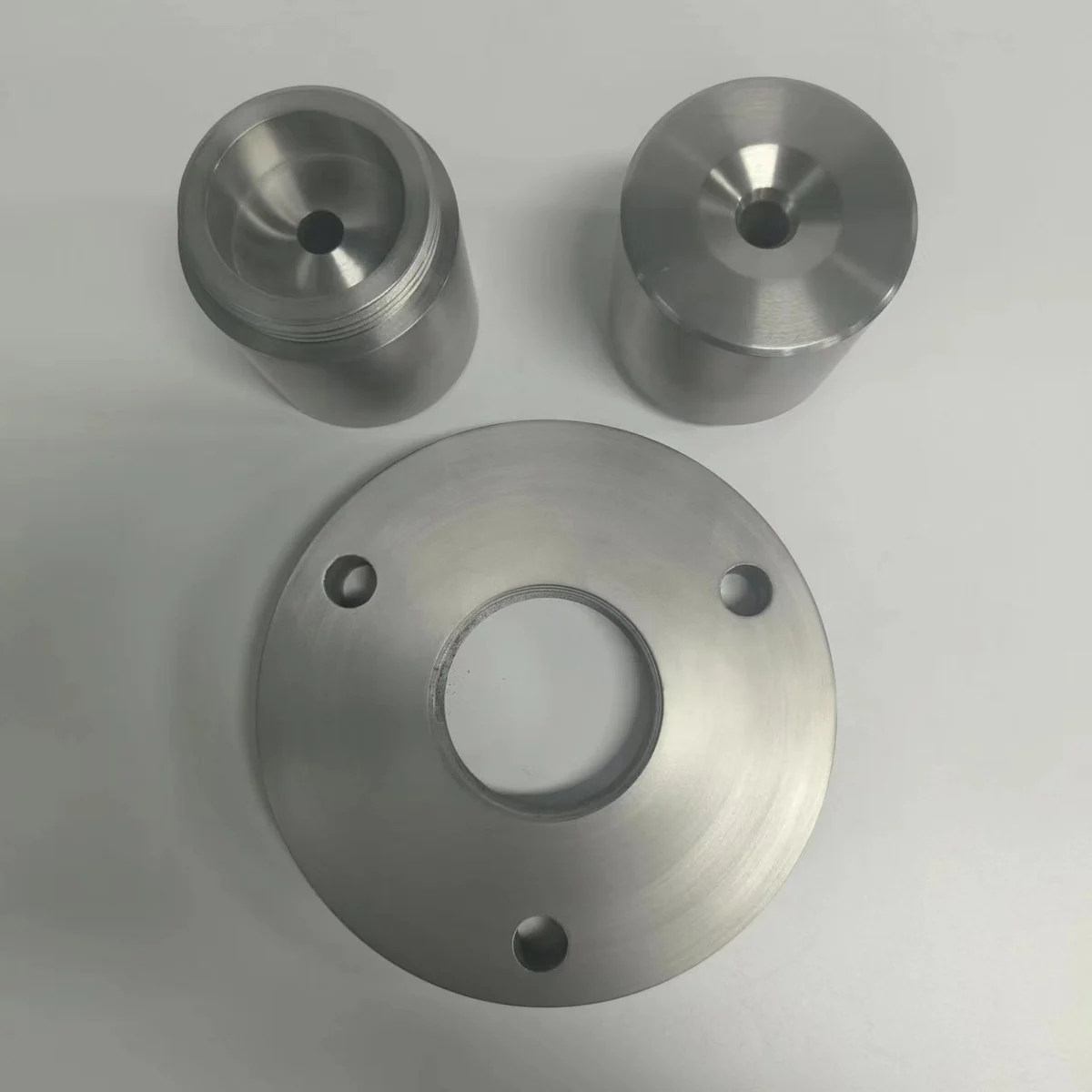
Image and drawing context: the cover shows component examples from our tungsten product materials. It does not establish the grade, dimensions or tolerance achievable for another part. The flange illustration is a conceptual drawing-review aid, not a customer production drawing or an inspection record.
About this guide: BOMO Metals combines the cited technical references with a drawing-based procurement checklist. Source examples describe their own materials and equipment. Manufacturing scope and acceptance requirements are confirmed for each enquiry.
Have a tungsten component drawing?
Share the grade, drawing revision, quantity and critical requirements so the material and manufacturing route can be reviewed together.